
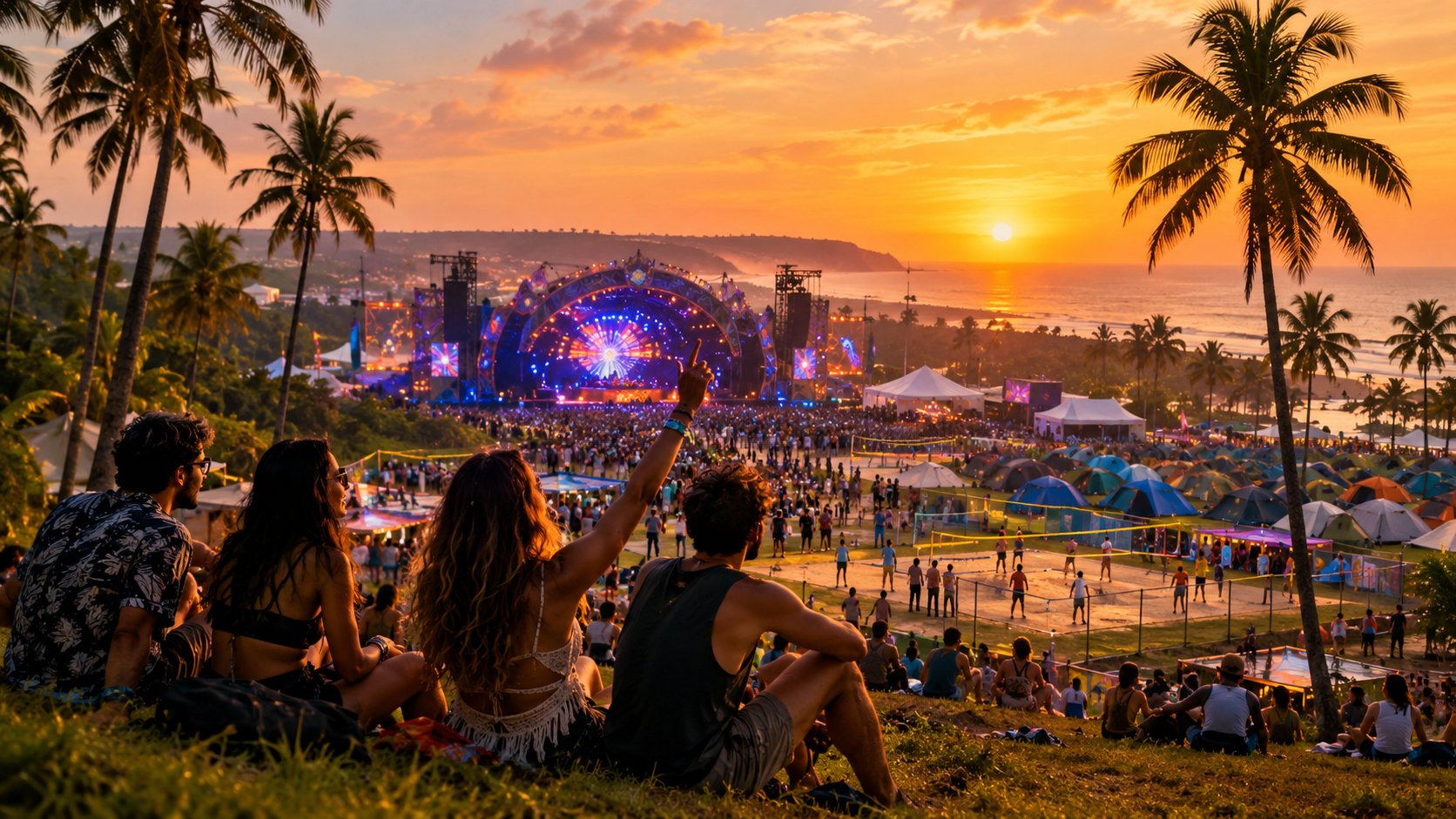
One-off concerts make headlines. Recurring properties — festivals, club series, branded experiences — make businesses. What that shift means for promoters, venues and the brands that back them.
Key Takeaways
- Promoters who only book artists are renting someone else’s audience; IP owners build their own.
- Brand-owned properties like Nykaaland and promoter IPs like Bandland and Lollapalooza India show the model working.
- Recurring IPs give sponsors frequency, data and lower single-night risk.
- Capital is following: ticketing platforms are investing heavily in live, even with losses in some segments.
The problem with one-off shows
At FICCI FRAMES 2026, Saregama’s Siddharth Anand Kumar argued that the industry cannot survive by renting an artist’s audience. His alternative: make the reason to come the concept itself — the way the event treats its audience, its sound, its safety, its experience — and turn that promise into an IP, much as a film studio’s name signals a certain quality [1]. The same panel noted that when an event is repeated again and again, that is when someone is actually making money [1].
The logic is simple. A one-off show depends entirely on the headliner, carries all of its risk on a single night, and leaves little behind except content. A property builds a brand, a returning audience and first-party data that make the next edition cheaper to sell.
The model is already working
BookMyShow Live has built properties such as Lollapalooza India and Bandland, a rock and alternative platform launched in 2023 [2]. Nykaa co-created Nykaaland with BookMyShow Live, turning beauty discovery into a destination experience [3]. District has staged immersive experiences such as The FRIENDS Experience in Mumbai [2]. On the college side, TribeVibe has built a repeatable circuit of thousands of shows [2]. Each example has the same ingredients: a recognisable format, a loyal audience and a calendar.
Why sponsors should prefer IPs
- Frequency: a nine-night club series or a season of weekend events gives repeated exposure to the same audience — which is how memory is built.
- Data: recurring properties can capture opted-in audience data and show trends edition over edition.
- Lower risk: one cancelled night in a season hurts far less than a cancelled stadium show.
- Better rates: multi-edition commitments usually buy more inventory per rupee.
- Category ownership: a brand can become the drink, the card or the ride of a property for years.
Capital is following the model
The platforms are investing. BookMyShow’s revenue from operations rose 31% to ₹1,831 crore in FY25, helped by marquee concerts and experiential events [4]. Zomato-owner Eternal’s going-out business, District, reported ₹318 crore revenue in Q1 FY27, up 54%, even as losses widened — a sign the platforms are buying growth in live [5]. With global experiential marketing spend projected around US$130 billion [3], investors increasingly see IPs, not single shows, as the asset worth backing.
What makes a property worth sponsoring
- A clear identity that can be described in one line and recognised in one photo.
- A defined, repeat audience with data to prove it.
- A calendar — multiple editions, nights or cities — not a single date.
- Infrastructure and permissions that are already proven at previous editions.
- Open inventory: activation formats, content rights and category exclusivity that are written down and priced.
The bottom line
India’s live economy is moving from events to properties, much as television moved from one-off broadcasts to shows with seasons. The promoters and venues that build IPs will capture more of the value; the brands that back them early will own the culture that grows around them.
Explore IPs on NowWat or talk to our partnerships team.
Sources
[4] FY25: BookMyShow boosts ad spend by 21% — exchange4media, 2026.
[5] How India is turning concerts into a tourism business — Upstox, 2026.
