
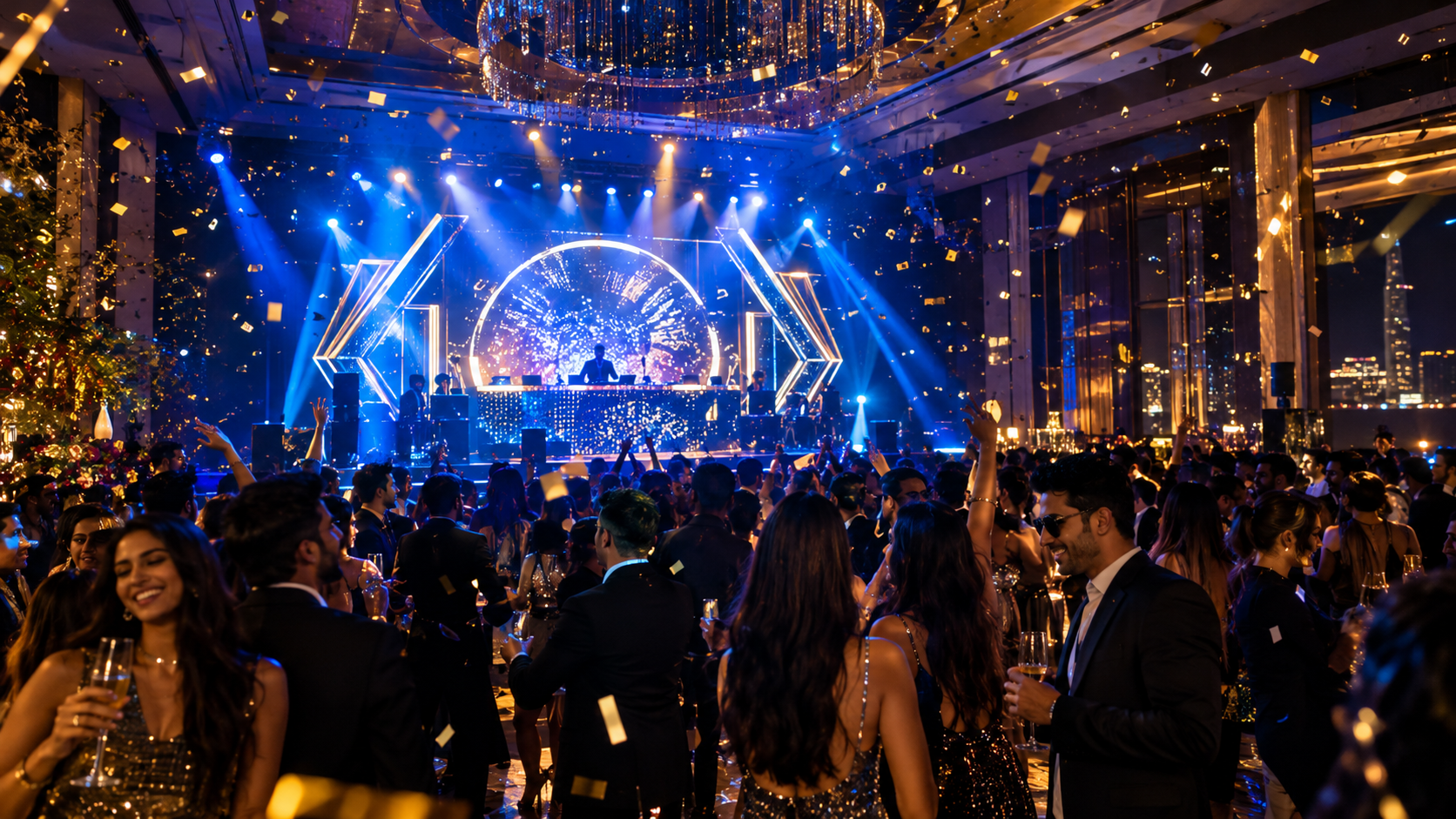
India’s live boom looks very different depending on where you sit. A clear-eyed look at the pressure points for each stakeholder — and where a smart sponsor can help.
Key Takeaways
- Top artists have never had more bargaining power; mid-level artists still struggle to live off gigs.
- Promoters and venues carry the risk while margins stay thin and data stays with the ticketing platform.
- Brands want proof and measurement; many lack in-house experiential expertise.
- Fans pay more than ever and still face scalpers, poor access and cancellations.
Artists: a golden era, but not for everyone
Entertainment lawyer Priyanka Khimani told FICCI FRAMES 2026 that talent now commands minimum guarantees, advances and revenue participation that were unheard of fifteen years ago [1]. Headliners increasingly want a share of ticketing, food and beverage, merchandise, sponsorship and after-party income [1].
Below the top tier, the picture is different. Mumbai singer-songwriter Mali, who has opened for Ed Sheeran in front of 27,000 people, told The Hollywood Reporter India she cannot make a living from gigging alone and splits her income roughly evenly between live shows, commercial composition and voiceovers [2]. Her view is that the boom’s biggest gift to Indian artists is exposure — international headliners paired with local openers turn casual concert-goers into fans of homegrown talent [2]. The missing pieces are small venues in more cities and a steady grassroots circuit.
Where sponsors help: fund opening slots and emerging-artist stages, back recurring club and college circuits, and build content series around local talent. It is cheaper than headliner-adjacent inventory and builds goodwill with the scene.
Promoters and venues: all of the risk, little of the data
Saregama’s Siddharth Anand Kumar described promoter margins as wafer-thin, noting that promoters take the risk without owning the audience or its data [1]. The FICCI panel also flagged the lack of purpose-built venues and multiple middlemen [1]. Venues face their own squeeze: inconsistent liquor licensing, permission reversals and safety scrutiny after the incidents of 2026 [2]. Stacked GST, platform fees and local levies further narrow margins [3].
Where sponsors help: commit early (advance payments reduce promoter cash strain), sign season-long deals rather than single nights, and co-invest in fan infrastructure like water, shade and transport that the venue would otherwise skimp on.
Brands: belief without a playbook
Brands are convinced experiential works, but many are unsure how to do it well. In the EY-Parthenon/BookMyShow CMO survey, 71% of brands not yet active cited lack of expertise, 57% budget pressure and 43% measurement [4]. Bad experiences add to the hesitation: logos on banners, unmanned stalls, and wrap reports full of impressions but no outcomes.
What brands need from the industry: standardised audience data, clear rate cards, comparable scorecards across properties and a single point of accountability from brief to post-event report.
Fans: paying more, trusting less
For a student, a ₹2,000 ticket can become a five-figure outing once travel, stay and food are added, and refunds for cancelled shows rarely cover those extra costs [5]. Scalping remains a legal grey area in India; tickets for Coldplay’s 2025 shows priced at ₹12,500 were advertised for over ₹3 lakh on resale sites [5][6]. Fans interviewed by The Hollywood Reporter India asked for basics: protection from bulk-buying scalpers, clean access to water, and no overcrowding [2]. Accessibility is also a concern — Khimani argued that concerts risk becoming a privilege for a narrow slice of society [1].
Where sponsors help: fan-first utilities earn the most goodwill. Fintech brands can run verified fan pre-sales; mobility brands can run shuttles; beverage brands can fund free water points; telecoms can fix connectivity at the gate. These are the activations people talk about afterwards.
The common thread
Every stakeholder’s problem is someone else’s opportunity. The brands that win in Indian live entertainment will be the ones that treat sponsorship as solving a problem in the system — for the artist, the promoter or the fan — not just buying a place on the banner.
Explore IPs on NowWat or talk to our partnerships team.
Sources
[3] Concert economy hits high notes — ACCA AB Magazine, Dec 2025.
[5] Students are fuelling India’s concert boom, they’re also paying the most — The News Minute, 2026.
[6] India’s Love for Live Concerts Still Faces Operational Hurdles — Outlook Business, 2026.
